
Dengue serotypes: what they are and why they matter
Dengue has 4 serotypes. Knowing which one infected you matters: a second infection with a different serotype raises the risk of severe dengue.
Reviewed by Bioq. Jonatan Garcia
Biochemist · National Registration MN 12.541 · Updated December 22, 2025
In short
Dengue has four serotypes: DENV-1, DENV-2, DENV-3 and DENV-4. Immunity to one does not protect against the others, and a later infection with a different serotype raises the risk of severe dengue through antibody-dependent enhancement. Laboratorio Aclimu identifies the serotype by RT-PCR from a routine blood draw.
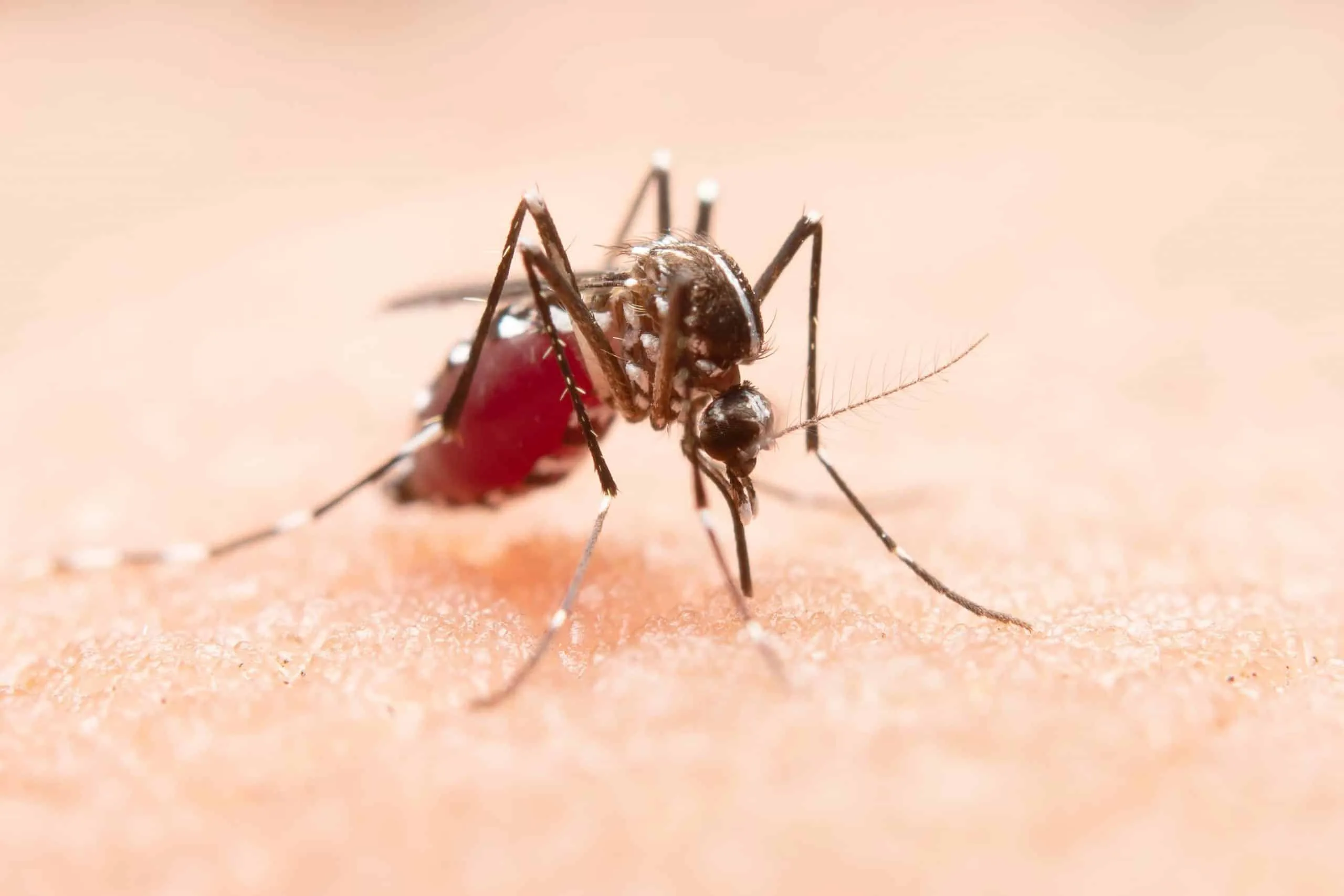
Dengue is a viral disease transmitted by the Aedes aegypti mosquito and, according to the Pan American Health Organization, it is the leading arboviral disease in the Americas.2 There is no single dengue virus, but four variants called serotypes: DENV-1, DENV-2, DENV-3 and DENV-4. Understanding the difference between them is key, because it has direct consequences for the risk of becoming seriously ill. In this article we explain what the serotypes are, why a second infection can be worse than the first, and how Laboratorio Aclimu identifies the serotype by RT-PCR.
What the dengue serotypes are
The four serotypes are variants of the same virus that cause the same disease, but each has its own antigenic characteristics: the immune system recognizes and responds specifically to each one. When a person is infected with one serotype, they develop lifelong immunity against that particular serotype. The problem is that this immunity does not protect against the other three. In other words, someone who has already had dengue from DENV-1 can be infected again later by DENV-2, DENV-3 or DENV-4.
All four serotypes circulate throughout the Americas, according to the Pan American Health Organization,2 so reinfection with a different serotype is a real possibility, especially in areas and seasons with active transmission.
| Serotype | Immunity it leaves | What it means |
|---|---|---|
| DENV-1 | Lifelong against DENV-1; no protection against the others | A later reinfection by DENV-2, 3 or 4 is possible |
| DENV-2 | Lifelong against DENV-2; no protection against the others | A later reinfection by DENV-1, 3 or 4 is possible |
| DENV-3 | Lifelong against DENV-3; no protection against the others | A later reinfection by DENV-1, 2 or 4 is possible |
| DENV-4 | Lifelong against DENV-4; no protection against the others | A later reinfection by DENV-1, 2 or 3 is possible |
Why a second infection can be more severe
This is the most important idea in the whole article. A second infection with a serotype different from the first — what is called a heterotypic infection — raises the risk of severe dengue. The mechanism is known as antibody-dependent enhancement (ADE).
The logic is as follows: the antibodies left by the first infection recognize the new serotype but cannot fully neutralize it. Instead of blocking it, they can facilitate its entry into cells and allow greater viral replication. The result is an exaggerated immune response and more severe illness. A study in humans, published in Science, showed that the risk of severe dengue peaks within a specific range of pre-existing dengue antibodies, confirming ADE as a real phenomenon in people, not only in the laboratory.1
That is why knowing the serotype is not a minor detail: it has epidemiological value — knowing which variant is circulating — and clinical value too, because it helps gauge the risk in people who have already had dengue before.
How the serotype is identified: RT-PCR
To find out which serotype caused the infection, a molecular technique is needed. At Laboratorio Aclimu we use RT-PCR (reverse transcription polymerase chain reaction), which detects the virus's genetic material in the blood and identifies which of the four serotypes is involved. It is a precise and sensitive tool.
RT-PCR performs best in the early phase of the illness, the first days after symptoms begin, when the virus is circulating at detectable levels. For the patient, it is a routine blood draw. Beyond identifying the serotype, genotyping makes it possible to study variations within a single serotype, which is useful information for epidemiological surveillance.
Prevention: mosquito control
Since there is no specific treatment that cures dengue, prevention is central, and the message from Argentina's Ministry of Health is clear: the key is to eliminate the mosquito and its breeding sites. Aedes aegypti lays its eggs in containers with standing water, so the most effective measures aim to break that cycle:
- Remove containers that collect water: buckets, bottles, tires, plant-pot saucers, plant holders, bottle caps and any object that can collect rainwater.
- Change the water in drinking troughs and vases: and scrub their walls to dislodge any attached eggs.
- Cover water tanks and storage containers that are in use.
- Personal protection: repellent, clothing that covers arms and legs, and screens on doors and windows.
Argentina also has a dengue vaccine; its indication, priority groups and availability are defined by Argentina's Ministry of Health.2 Laboratorio Aclimu is a clinical analysis laboratory: we do not administer vaccines. Our contribution is in diagnosis and serotype identification. The decision about vaccination rests with each person together with their doctor and the official recommendations.
One figure that ties directly to the serotypes: in the phase 3 trial of the tetravalent TAK-003 vaccine, with four and a half years of follow-up, cumulative efficacy was 61.2% against laboratory-confirmed dengue and 84.1% against dengue requiring hospitalization. In people who had already had dengue, efficacy was demonstrated against all four serotypes; in those who had never had it, it was demonstrated against DENV-1 and DENV-2, was not observed against DENV-3, and the few cases did not allow DENV-4 to be evaluated.3
How to get tested at Laboratorio Aclimu
If you have symptoms consistent with dengue or need to confirm the serotype, at Laboratorio Aclimu we determine it by RT-PCR from a blood draw. You can book your appointment directly. If you have a fever and dengue symptoms, always consult a health professional; laboratory diagnosis supports that clinical assessment.
This article was reviewed by the biochemistry team at Laboratorio Aclimu. The information is for general guidance and does not replace a consultation with your doctor or health professional.
Frequently asked questions
How many dengue serotypes are there?
There are four dengue virus serotypes: DENV-1, DENV-2, DENV-3 and DENV-4. All four circulate in the Americas and any of them can cause the disease. They are different enough from one another that the immunity left by one does not protect against the other three.
Why can a second case of dengue be more severe?
Because a previous infection with one serotype leaves antibodies that, faced with a different serotype, may help the virus enter cells and amplify its replication instead of neutralizing it. This is antibody-dependent enhancement (ADE), described in humans, and it explains why a heterotypic reinfection raises the risk of severe dengue.
What is the point of knowing the dengue serotype?
Identifying the serotype has epidemiological and clinical value: it shows which variant is circulating, helps anticipate the risk of severe illness in people who have already had dengue, and guides surveillance measures. At Laboratorio Aclimu it is determined by RT-PCR, a precise molecular technique.
How is the dengue serotype detected in the laboratory?
Through RT-PCR (reverse transcription polymerase chain reaction), which detects the virus's genetic material and identifies which serotype is involved. It is most useful in the early phase of the illness, when the virus is present in the blood. For the patient it is a routine blood draw.
How is dengue prevented?
The main measure is controlling the Aedes aegypti mosquito: removing any container that can collect water, where the mosquito lays its eggs. Personal protection adds repellent, clothing that covers the skin, and mosquito nets. Argentina also has a dengue vaccine; its indication and availability are set by the Ministry of Health.
References
- Katzelnick LC, Gresh L, Halloran ME, et al. Antibody-dependent enhancement of severe dengue disease in humans. Science. 2017;358(6365):929–932. Available at: pubmed.ncbi.nlm.nih.gov
- Pan American Health Organization (PAHO/WHO). Dengue: symptoms, prevention and treatments. Available at: paho.org
- Tricou V, Yu D, Reynales H, et al. Long-term efficacy and safety of a tetravalent dengue vaccine (TAK-003): 4·5-year results from a phase 3, randomised, double-blind, placebo-controlled trial. Lancet Glob Health. 2024;12(2):e257–e270. Available at: pubmed.ncbi.nlm.nih.gov
Tags
Keep reading
Related articles
 Sexual health
1 hour ago
STI and HIV testing in Buenos Aires for travelers
Confidential STI and HIV testing in Buenos Aires for travelers — HIV, syphilis, hepatitis and more, at an accredited lab, results online in days.
 Travelers & expats
7 days ago
Medical tests in Buenos Aires for travelers
Blood work and medical tests in Buenos Aires for travelers and expats: an accredited lab, fast online results and English-friendly service.
 Genomics
9 days ago
DNA ancestry test: where you come from
What a DNA ancestry test measures, how it reads your ancestry by region and by maternal and paternal lineage, and what Argentines carry in their DNA.